
Surviving Survival
There's no joy in just surviving. You gotta find a way to RISE.

“I started to wake up and check in to see what the soul needs today.”
I fumbled for my phone as Leanne Kallemeyn, contributing author of the new book, Rising Above, calmly turned the mic back over to my best friend, the emcee of this part of the event. I had been taking notes throughout the Q&A, the reflections from this panel of breast cancer survivors too poignant not to capture in real time. And as I looked down the table at the eleven women brought together by two shared attributes, breast cancer and authorship, all I could think was “Wow, this is what my soul needed today.”
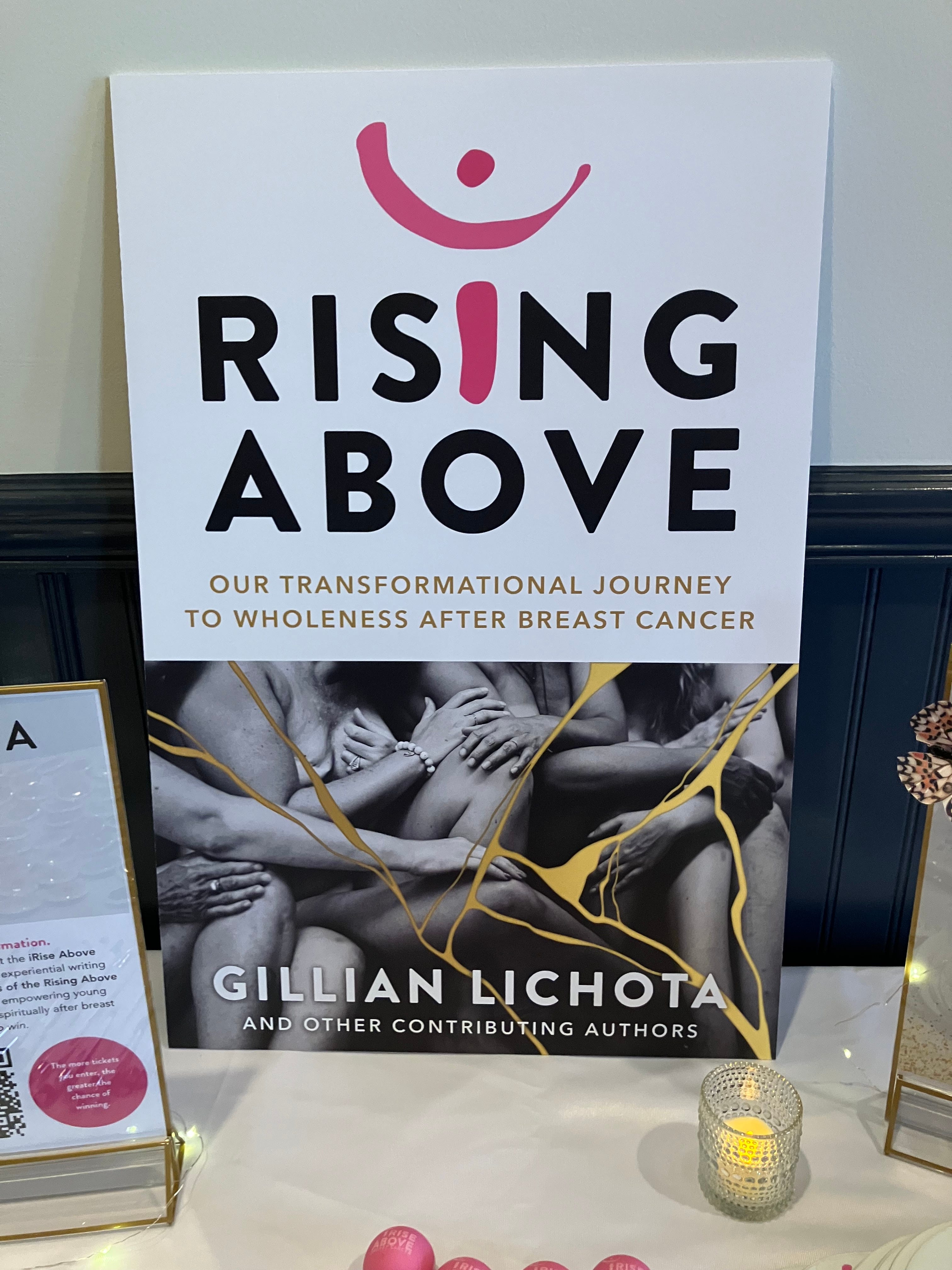

I was still a baby when my first friend was diagnosed with breast cancer. Newly graduated with a Master’s Degree in Genetic Counseling, I thought I knew something about “people with breast cancer”, the patient-centered language I’d been taught to use in graduate school quick on my tongue. I clearly missed the magnitude of the 1 in 8 statistic or the 60-72% risk of breast cancer for someone with a BRCA1 variant. Those were numbers I had memorized, but not numbers I had memorialized…until those numbers included my college mentor. All of a sudden, those numbers meant shopping for wool hats at a street market in DC to keep her newly bald head warm. They became attending her wedding, fast-tracked to occur before her death. They meant an announcement I never expected to see for someone so young.
Her obituary.
Jenny died.
She was 28.
Every time I wear the opal-colored medallion I bought for $10 at the same street market where Jenny bought wool hats, someone comments on its originality. “Yes, she was,” I think.
After Jenny, I started thinking about numbers differently. The numbers had names, and the names of those I knew grew each year. There was the ultrasound tech at the hospital I worked at, in her late 30’s. And a close friend’s coworker, the mother of two young sons. And my former colleague, a genetic counselor herself, and a soul that seemed too big for breast cancer. And then there was my best friend, who called me the second she saw her biopsy result in the patient portal. I was in an airport. I sat down hard on a line of connected seats and closed my eyes, exhaling as I listened to what it sounds like when the reality of cancer sinks in to someone you love.
I was there for her mastectomy, the reconstruction, and the repair. The drains and the pains, the exhaustion merely surviving enacts from a body. I was far from her every day caregiver, to be clear, but I remember the darkness. As the years have passed and true healing has happened, I have witnessed the metamorphosis, a slow emergence from the chrysalis into a bright light. And hot damn if my best friend hasn’t become the most beautiful butterfly in the sky!
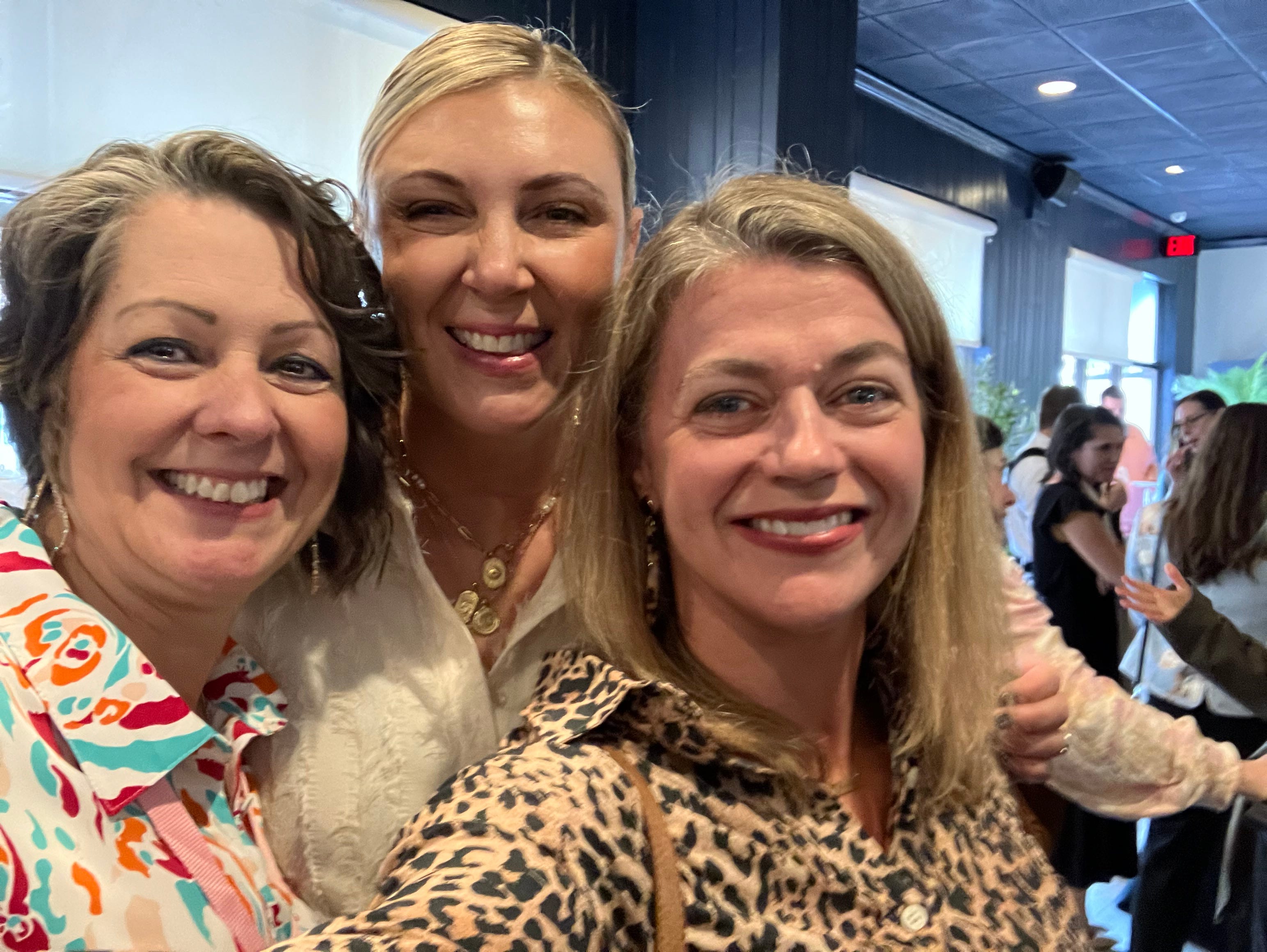
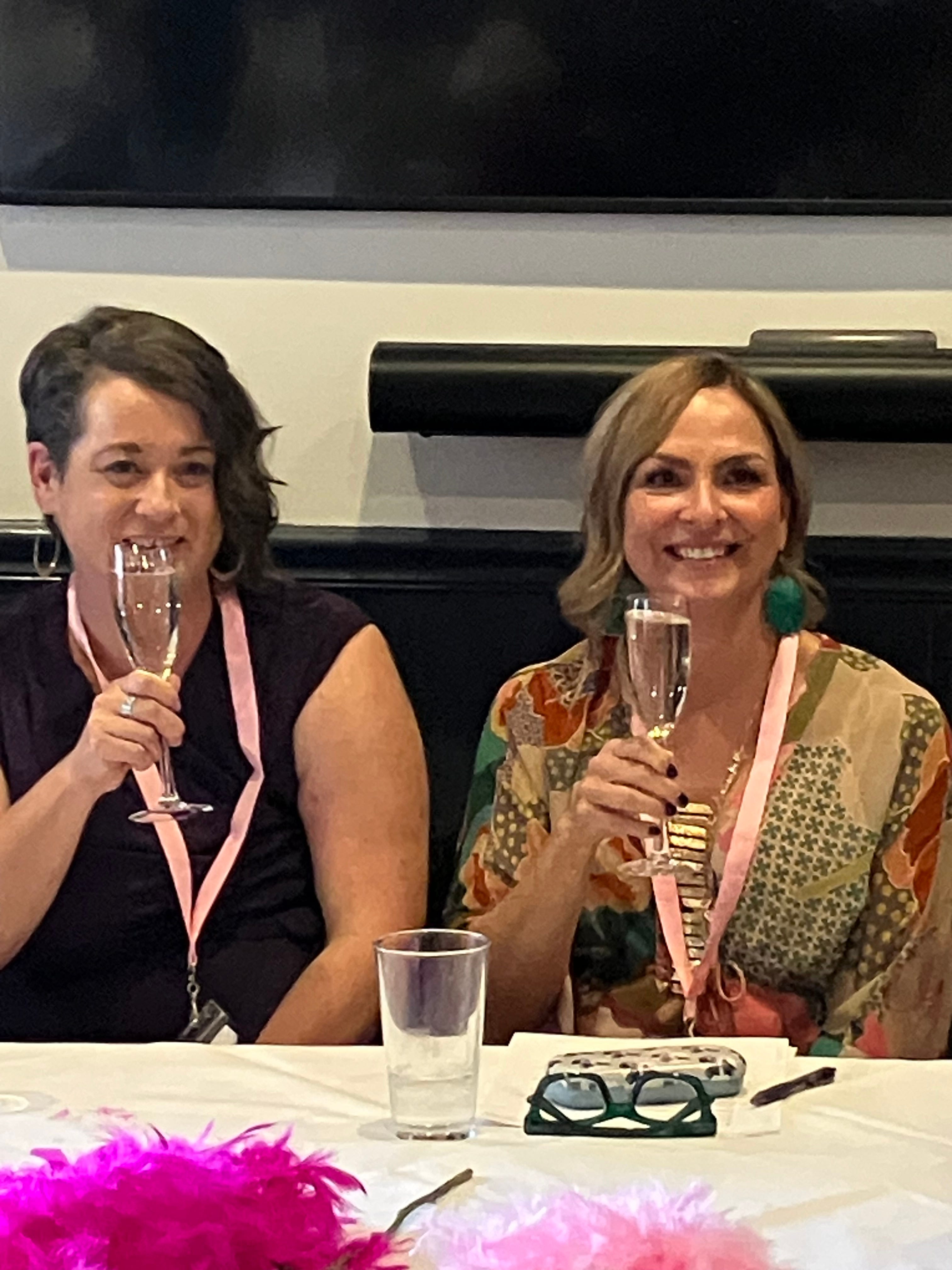
It was this same evolution that became evident in the responses of the women on the panel. Their suffering seared into the words of the chapters they wrote, but their joy emanating over the tops of their pink boas. Their stories are not just a testament to survival; they are the testimonies of surviving survival. The women in front of me, my best friend included, have reached far beyond simply surviving. From the depths of their pain they have excavated new purpose, and so now there is something to celebrate.

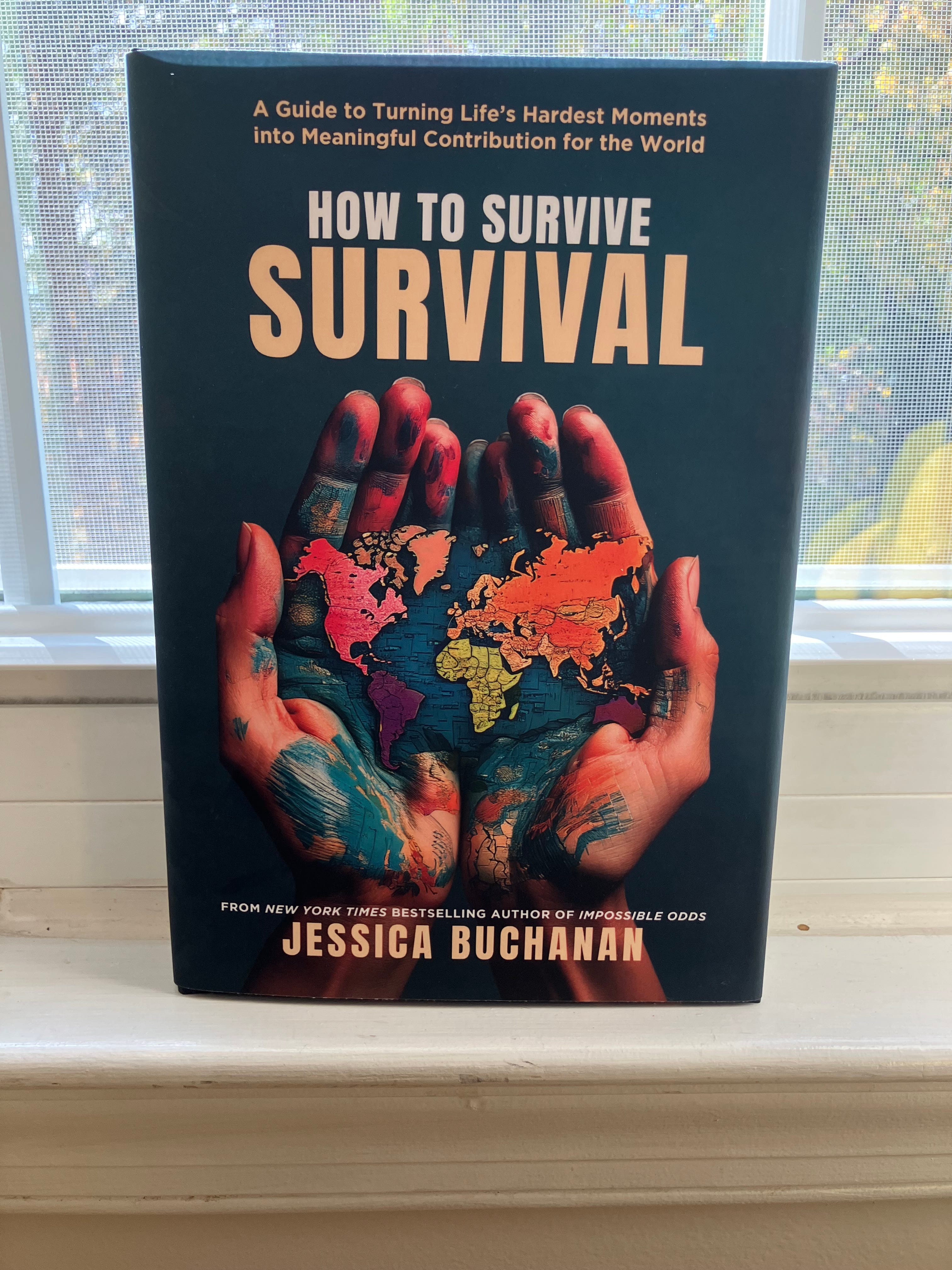
When I say I work with Jessica Buchanan, the kidnapping survivor, almost everyone cocks their head to the side with vague recognition. When I add, “Yeah, she was rescued by Seal Team Six,” their eyes pop open. It’s definitely a thing to be kidnapped and held in a desert for 93 days and then rescued at the order of the President by our country’s most elite military unit. I get why people are attracted to the story. I certainly was. And yet, she seemed so…normal, and of incredibly sound mind for a human subjected to that kind of trauma.
She even laughed when, horrified, I told her about a text message I almost sent her after not having heard from her for a few days. Thinking I was being cheeky, I typed “Proof of life” onto the screen with her name at the top and my finger dangerously close to the little blue up arrow. I almost hit send, and then God, the Universe, common sense, or just a serious fear of never being able to speak to her again intervened and I realized what I had just written to A KIDNAPPING SURVIVOR! I about had a heart attack, but when I hesitantly related this quite embarrassing story to her later on, she just chuckled. “I would have found that funny.”
Huh?
What I didn’t realize then and have only just started to understand is that Jessica Buchanan has spent the past fourteen years surviving survival. She dealt with the pain, not well at first, she admits, but finally accepting the impact of what happened to her. What it did to her life, her work, her worldview. And through that process, she found meaning, meaning that has given her purpose.
So, she can now laugh at my fucked up funny.

I should understand the value of gallows humor, the relief at being able to release the tension with some seriously inappropriate gaffe. It’s how my husband and I survived his accident, ripping horrible jokes in the Emergency Room, to the point where the nursing team thought I didn’t understand the magnitude of his injuries. They pulled me aside to try and gently reiterate how hurt he was. I stepped away from the nurse’s kind, but patronizing touch.
“Oh, I understand,” I quipped, tears budding behind my eyes, “but he’s using my reaction in order to judge how hurt he is, so right now we’re going to tell some bad jokes, okay?”
I didn’t know what I was doing at the time. I was just following my instinct, a wife’s inner knowledge honed from the many other times we had faced horrible news. My husband wasn’t dead, and didn’t appear to be in danger of dying, so we were already on the surviving side. And soon, we would have to begin the hard work of surviving survival.
My husband’s story is featured as a “Survivor Spotlight” in Jessica Buchanan’s new book, How to Survive Survival, out TODAY. Gotta admit, it’s weird seeing someone else’s account of his story, or, more so, his reflections on his story. We obviously lived those years together, and I was aware of the decisions he was making daily to come back to himself and to us, but like Jessica’s experience, I answered a lot more questions about how the hell you put someone’s face back on than I did about how he found meaning and purpose in his new post-accident existence.

I am blessed to be surrounded by people who have experienced life’s greatest traumas…and survived. But survival has been just the beginning.
The authors of Rising Above and my best friend demonstrate how to find wholeness even when part of you is taken. My favorite metaphor from the Q&A came from Deborah Hutchison, who was told during her treatment that she needed a “salt water facial.” Confused as she thought she needed chemo not cosmetology, she questioned the advice giver. “You need to go home, stand in the shower, and cry,” came the clarification. These women all had good reason to just stay in the shower, but each chose instead to step out, dry off, and do something.
Jessica Buchanan was in a fucking desert! For 93 days! She did film a Proof of Life video (so many 🤦♀️🤦♀️🤦♀️ on my part)! But she was rescued from the desert, and so the second part of her life, whether she was ready for it or not, began. In her book, she admits that in the years following her rescue, she sometimes longed for the simplicity of the desert, where her only responsibility was survival. The work of surviving survival was often excruciating, but with time, therapy, and wine (I’m just guessing), she found meaning and purpose in being able to turn her platform in to an opportunity for other women to tell their stories of trauma, healing, and renewal.
My husband “broke his face,” as my daughter likes to say. And, technically, they put it back together twice. As a result of that senseless accident which was in no way his fault, he had to let go of not just a career, but his very identity. Not to mention endure years of double vision, multiple reconstruction surgeries, and a traumatic brain injury. It sucked as bad as it sounds. But my husband learned long ago to embrace the suck, and through his quiet but determined persistence, he earned a Master’s Degree and found purpose in hunting bad guys the nerdy way…with a computer.
What these stories have taught me, what they seek to teach all of us, is that joy isn’t just surviving. It’s figuring out how to RISE. We will not make it through this life without suffering in some way, and so we will all face the choice of what to do when the acute nature of that suffering ceases.
I hope we seek community.
I hope we find a purpose.
I hope we give ourselves grace.
I hope we laugh.
I hope we choose joy.

What else is there to say here? Oh, yeah. I love you, Jess Greenwood. You're a teacher, a "feeler" with a huge heart, and a writer with humanity emanating from every pore. Anyone who's a friend of yours is blessed, indeed. From surviving survival to thriving. Because yes, your friends had their experience, and so did your husband, but you survived survival right along with them. I love what you said about your husband looking toward you to determine the extent of his situation, and how your instinct to care came through as dark humor. I wrote about salt water facials today, too! I never heard that expression before. Love it. You're a champ, Jess. xo
The vulnerability and resilience of the human spirit is truly remarkable; the books Rising Above and Surviving Survival are testament to this. They give hope to us all and a sense of belonging that we are not alone. 💕