
Health needs a Joy💣
Why health feels so important and so stupidly hard

I was twelve when I started dieting.
I overheard my dance teacher tell my mother that I was “a talented dancer” but that I would be limited if I didn’t “lose the weight.”
Not some weight…”the weight.”
I was a chubby kid, no doubt. Genetics and my mother’s love language, ie. sugar, were not in my favor. I wasn’t quite fat, per se, but I did not look like the lithe waifs that filled the halls of my dance studio.
TEEN magazine, a girls’ best friend and destructor of all prepubescent self-esteem was my go to for research on how to lose weight. Article after article assured me that a 1200-calorie diet would get me there in no time! I tried that for a few days and thought I was literally going to starve to death, so I upped it to 1400 calories. I also added in a fat contingency, because once an overachiever, always an overachiever. 21g of fat per day, split 5-7-9 between breakfast-lunch-dinner. Odd numbers please me.
Unsurprisingly, I lost the weight. Had I been allowed to continue, I can only imagine that I might have just disappeared, the weight having been so lost as to be unrecognizable in human form. In one of the only acts of taking control my mother ever performed, she intervened.
My pediatrician diagnosed me with anorexia and put dance on the chopping block if I did not gain weight. Unfortunately, dance was the only thing I loved, the only place I felt at home, the only opportunity to be fully and unapologetically me. My physical health and my mental health battling it out for whose needs were greater…or more acutely dangerous.
I, of course, had zero intention of gaining weight. I just needed to game the system. The deal was I could go back to dancing when I weighed 115 pounds. The fact that I ever weighed under 115 pounds is still an enigma to me. I knew the scale on the right side of the pediatrician’s office weighed three pounds heavier than the one on the left, and I knew that water weighed a lot. I would almost pee myself sitting on the right side of the waiting room after forcefully downing as much calorie-free liquid as my bladder could possibly hold. Afraid to move, I manifested the relief of a trip to the bathroom right after effectively tipping the scales past the magical 115…just past.
I tried to find the photo of my 13-year old self, dressed in one of my competition costumes, collar bones painfully visible from underneath the sequins. There are dark circles ringing my eyes and hollows under my cheekbones. I look emaciated, sick, and tired. The photo was not to be found, but I’ll never forget the haunted look in my eyes.
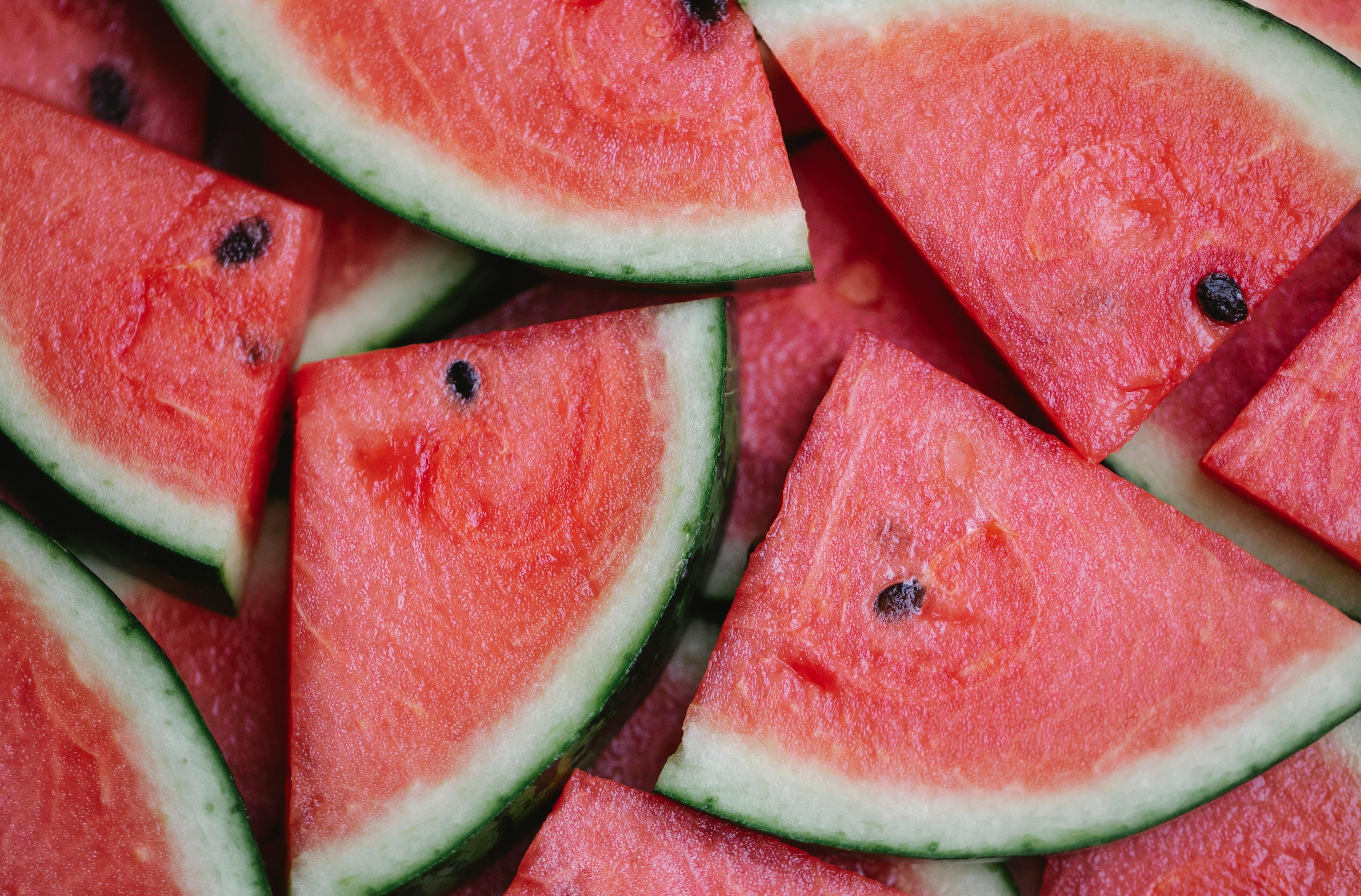
As you can imagine, my relationship with food has been fucked ever since. For the vast majority of my life, health to me meant being thin, and there was absolutely no joy to be found in the process of trying to achieve that end state. There is starvation, depravation, self-loathing, counting, weighing, loneliness, and watermelon, every dieting woman’s best friend. Joy is measured by blinking red digits, and it is nearly impossible to maintain.
In graduate school, I found running, largely because I was broke and my roommate was a persuasive former cross country star. Running was free, could be done outside, and once I could actually do it for more than a mile without wondering if my lungs would collapse, I found it surprisingly rewarding.
Running required fuel. I could dance lightheaded, the lights, the turns, it was all sort of ethereal anyway. I couldn’t run hungry. And the more I ran, the more I realized I also couldn’t eat crap and run. Pizza and beer does not a runner make.
I felt strong when I ran, not skinny, and I started to like it. Adding weights to the routine slowly resulted in more definition. I developed a strange fascination with my triceps. “Suns out, guns out” became an excuse for me to flex the back side of my arm, the only part of my body I’ve ever been proud of.
I can’t say that running brings me joy, but it brought me something better than dieting did. Something that feels additive, not destructive. It’s probably why that sentence is in the present tense, because running is something I still do. Dieting, not so much.
Food + Exercise = Health
Right?
Isn’t that all there is to it? Eat less, move more.
Simple.
I believe, with some evidence but nothing approaching proof, that my mother knew she had cancer eighteen months before I knew. She called cancer the “c” word, having had an initial bout ten years prior that she didn’t tell me about, but that I found out about in the recovery room following her eight-hour “routine hysterectomy.” Not so routine, but oh so my mother.
I expect that when there was concern over a growing mass in her abdomen the second time around, she elected to ignore it. I am still baffled by the mind over matter it takes to actively absolve yourself of any awareness of a tumor maliciously growing on your insides, but she did. By the time her illness was too advanced to hide, she had three months to live.
My mother died after having two separate primary cancers ten years apart. Her mother died of cancer. My uncle, her brother, died of cancer. All under the age of 70.
We do not have a hereditary cancer syndrome, or, at least, not one that can be identified by current genetic tests. Trust me, I checked.
I am not afraid to die. But I am terrified of leaving anything on the table.
If there is anything I can do to give myself more time, anything I can do to prolong the years I have with my people, with this world, I will do it.
Is that health?
If so, health feels like anxiety, a constant pressure to stay “in good health” in order to stay present in this world.
That does not feel like joy to me. That feels like fear.
“Health” took on a new tenor after my husband’s accident. When you start with a broken face, it’s a strange concept to consider what “healthy” might be on the other side. Is it “Sees one person instead of two when looking straight at them?” Is it “Does not need to breathe through a hole in his neck?” Or perhaps “All parts of face reattached to skull.”
For awhile, “healthy” to us meant alive. Then, “mentally sound”, followed by “surgically repaired” and culminating with “could reasonably be confused with human.”
My husband was an exceptionally adept athlete prior to his accident and received premier care at Walter Reed Medical Center. His access to care went beyond just the specialists who treated his physical injuries to include rehab experts, functional nutritionists, acupuncturists, TBI specialists, and even music therapy. His bones have been reattached or replaced by synthetic substitutes, and he can reasonably perform all required acts of daily living, what we came to understand as the medical version of “health.”
But that came at a price.
Six and seven digit numbers swam in front of me on the first EOB I opened. The anesthesiologist’s bill for my husband’s first surgery (the first of ten) was over $200,000. I laughed maniacally, then sat down to suck in air so I wouldn’t throw up. My husband was an active duty member of the military at the time of his accident. That is the only reason we are not bankrupt today.
In fact, over 66% of the people who filed bankruptcy over a three-year period in the US cited “medical-related reasons” as having contributed to their financial hardship. This is despite the protections initiated under the Affordable Care Act. The cost of healthcare in this country is just exorbitant, and if you are unfortunate enough to experience a major health episode, it can quickly become a financial disaster.
We are not bankrupt, and my husband has a face that functions. Joy, for sure.
Or perhaps just relief.
Here’s what I find confusing about health. Unlike joy, health is defined by some widely agreed upon metrics.
BMI, blood pressure, Hgb A1C, triglycerides, cholesterol, weight.
And since those are not things we can readily control or see change in real-time, we invented metrics for and ways to track things that we can control.
Daily steps, target heart rate, sleep scores.
There seems to be no end to how many ways we can define “health”, a fact that our consumerist nature takes full advantage of.
But, no one can be perfect across all of these metrics, certainly not all of the time and likely even most of the time. Are you healthy if you hit 10,000 steps daily, have a Hgb A1C of 5.4, fall within normal BMI, but have high cholesterol?
I don’t know.
What I do know is when I start to measure, when there are things to count, numbers to memorize, goals to hit, gadgets to buy…I don’t feel joy.
I feel more responsibility.
Is it any wonder then that “health” is so hard for most of us? It feels like a fucking job combined with Catholic guilt multiplied by induced poverty divided by never-ever-going-to-get-there depression.
Health is woefully in need of a joy💣!
I want to write something concrete about joy and health, identifying the potential intersection of the two and delighting you with the solution to all of the counting and measuring and tracking.
But I may have to work backwards here and talk my way to there.
I can offer a solution to the second part. Stop🛑doing it…unless it brings you joy. I don’t count shit anymore. Not only is it exhausting but it makes me feel horrible about myself when the numbers don’t add up. I cannot be held to a certain number of calories, steps, squats, minutes, or anything else as my way of evaluating health. My body might benefit from that metric but my mind certainly doesn’t. There is zero joy in the numbers for me, so I look at them only as a longitudinal assessment. How do things look over time? Looking at the numbers that way is like looking at my 401K. Some nasty swings here and there for reasons we know but shall not discuss, but for the most part, on average, over time…trending in the right direction.
This is not true for everyone, or even for most ones, but it is true for me. Consistency is my approach to health. It’s boring and lame and means I don’t like being out of my routine for long, but in as much as I know how to define health, it seems to be working.
So, the solution to the numbers game is know what role they play in your joy. They can only be helpful if they are additive, not destructive. If you are whipping yourself every time you get on the scale, blow that fucker up. But if hitting 10,000 steps per day makes you feel like an Olympian, by all means do laps around your living room. I will sit patiently waiting until we can celebrate.
The first part, the intersection between health and joy, is trickier, a word I’ve adopted from Dr. Becky of child psychology fame.
Health feels like something we have to do, while joy feels like something we get to experience.
One is a gift, freely offered to all of us; the other something you work for and either succeed or fail at. One is about living; the other is about not dying.
I don’t want to die. At least not now, or before I’m 70, or in some semi-preventable way. But not dying is not the same thing as living.
My mother lived while she was dying. She ate peanut butter and jelly sandwiches for breakfast every morning and spent hours on the side of the Blue Ridge Parkway staring at the mountains and colored quietly in the sunlight. Health for her was a done deal, but that didn’t keep her from living.
My husband sang and did wheelies down the hallway of the hospital drooling on himself breathing through a trach while his face sagged and his eye drooped. He was a solid “F” on the health scale, but an Honor Roll recipient at living.
Poor health and joy are not mutually exclusive, which suggests that good health and joy shouldn’t be either.
I used to abhor the term “healthy living”. It sounded like sussed up marketing for an old folks home. But I think I get it now. There’s a space there between the words where joy can snuggle in, a connector between something we want and something we are. And with “healthy” as a modifier instead of a noun, the emphasis stays on "living”. It’s the living that’s the ultimate goal, the joy💣. The “healthy” is simply an enhancer.
If there is no joy in health, we will not pursue it for long, repeatedly falling back to a state with far less rules, regulations, and recidivism. But if health is fundamentally about pursuing joy, about living, I would bet far more of us would be on board. Of course, that would require us to universally accept the understanding that health will look different on all bodies and require governmental support to make healthy things more equitably accessible. Things to work on…🙄
BUT! I believe that health is not just another thing to do, to accomplish, to be. I believe that health is about living, not just not dying. And I believe that living involves decadence and laziness and indulgence and discipline and that joy bubbles when you gift yourself all of those things.
Healthy living. Full living. Joyful living.
And, if joy isn’t a big enough motivator, with health, at least you won’t go bankrupt. 🤷♀️
Love these thoughts! I too was that awkward girl doing the starvation diet to be slim like all the other gals in my class. All of my life has been a love hate with food and exercise. When I look back on pictures of me- I say to myself, I wasn’t fat or obese. So how did I get it into my head that I was. ( Thanks targeted marketing). I’m 61 now and finally at peace with my frame. Joy is a huge component, and knowing that I am “fearfully & wonderfully made”.
"I believe that health is about living, not just not dying. And I believe that living involves decadence and laziness and indulgence and discipline and that joy bubbles when you gift yourself all of those things."
This is so good. Joy should infuse everything we do, especially health. We get to choose how that happens. I often say if you don't enjoy moving your body, you won't continue doing it, so find something you love. I hated running, but I love swimming and yoga. I have been doing them for over 30 years. Joy is key.